Press Releases

Welcome to The Block's Press Release hub. Explore official announcements, major project milestones, product launches, and strategic updates directly from organizations across the Web3, DeFi, and digital asset ecosystems.

Blockchain Association CEO Summer Mersinger to step down, Kristin Smith to return as interim CEO

By Sarah Wynn • Edited by Jason Shubnell September 25, 2026, 3:48PM EDT

Leading cryptocurrency trading group, the Blockchain Association, is switching up its leadership, with CEO Summer Mersinger set to step down next month and former CEO Kristin Smith returning to lead the crypto trade group on an interim basis.

On Friday, the Blockchain Association said Mersinger's last day will be on Oct. 16 and said she will stay on as an advisor until the end of the year.

"I'm grateful to our team, who poured everything into this work, and to our members, who showed up for it again and again," Mersinger said in a statement. "Kristin built this Association from the ground up, and BA is in good hands. I'll be cheering them on."

Smith, who was previously CEO at the Blockchain Association, will step in in the interim. Smith is currently the president of the Solana Policy Institute, or SPI, and its communications director Emily Wilson told The Block that her role there is not changing.

"Come Oct. 17, she will take on the additional role at BA as interim CEO to guide the organization to its next chapter," Wilson said.

Mersinger led the Blockchain Association during a pivotal period for crypto policy in Washington. During her tenure, Congress passed stablecoin legislation that was signed into law in July 2025. The association also pushed for broader crypto legislation, including the Clarity Act, which passed the House last year but has since stalled in the Senate. The bill is now unlikely to become law this year, despite hopes within the crypto industry.

Mersinger took on the role as CEO of the Blockchain Association after leaving her role as a commissioner at the Commodity Futures Trading Commission. She was nominated by former President Joe Biden to fill a Republican seat at the CFTC and was sworn in in March 2022.

"Summer took the helm of Blockchain Association at the most consequential moment in the history of crypto policy, and she met it," Smith said. "She brought the credibility of a former regulator and experience on Capitol Hill, and she put every bit of it to work for this industry."

"We have an exceptional team and a clear mission. I can't wait to get to work," Smith added.

Man charged in $16 million crypto 'massive pig butchering’ scam

By Sarah Wynn • Edited by Jason Shubnell September 25, 2026, 1:48PM EDT

The U.S. Attorney's Office in Missouri charged a man on Friday for his role in defrauding someone of millions of dollars' worth of crypto in a "massive pig butchering" scam.

The attorney's office said in a statement that Trung Nguyen Van, 37, from Vietnam, was charged with money laundering for his role. Pig butchering scams, also known as romance scams, build relationships with users and then lure them into fraudulent investments.

Prosecutors said that during the summer of 2024, the victim transferred about $16 million worth of crypto because they thought they were investing in a crypto platform called "Triangle." Right after receiving the funds, Van allegedly transferred them into private crypto wallets.

Other victims may have been involved as well. Other U.S. based victims have reported millions of dollars in losses and attributed those to wallets that sent funds to Van's crypto wallet, prosecutors said.

"Each of the victims were instructed to transfer cryptocurrency to different websites, but each victim reported a similar story," the attorney's office said. "In each of these schemes, victims were guided by an individual they met online to invest cryptocurrency in a specified 'website' with a promise of high financial returns."

Magic Eden legacy approvals leave $5.7 million in NFTs exposed to exploit before rescue

By Brian Danga • Edited by Jason Shubnell Web3•September 25, 2026, 10:09AM EDT

Magic Eden said on Friday that its legacy approvals on its EVM marketplace left NFTs worth more than $5.7 million exposed to an exploit in Limit Break’s Payment Processor V2.

In an X post, the NFT marketplace said it stopped using the processor in October 2024 and shut down its EVM marketplace in the first quarter of 2026. "No live Magic Eden listings were impacted," it wrote.

The vulnerability surfaced after an attacker exploited the processor to steal 10 Meebits, 50 Otherdeeds, 10 World of Women NFTs, and 235 Desperate ApeWives, according to Yuga Labs Vice President of Blockchain 0xQuit.

0xQuit said Limit Break quickly paused Payment Processor V3, which was affected by the same bug, but V2 could not be paused.

That left a whitehat operation as the main way to protect assets, the VP said, adding that the operation rescued 23,155 NFTs worth more than $5.7 million.

However, the rescue did not cover 660 WETH that was also vulnerable to a related exploit.

"We later discovered that a similar exploit could be used in reverse to steal WETH," 0xQuit wrote in an X post. "660 WETH was at risk, which we unfortunately were not fast enough to recover."

According to Magic Eden's update, NFTs listed on its EVM marketplace between roughly February and October 2024 may be affected. The platform advised users to revoke the Payment Processor V2 approval on Ethereum, Polygon, and Base.

Meanwhile, users will be able to reclaim rescued NFTs after revoking the exploitable approvals.

Aave V4 on Base adds Coinbase tokenized stocks as collateral for USDC loans

By Brian Danga • Edited by James Hunt DeFi•September 25, 2026, 10:00AM EDT

Coinbase’s tokenized stocks can now be used as collateral for USDC loans on Aave V4 on Base, bringing seven U.S. equities into the decentralized lending protocol’s collateral markets.

The Equities Hub launched Friday with Coinbase-issued tokenized stocks tracking Apple, Amazon, Alphabet, Meta, Microsoft, Nvidia, and Tesla, according to a statement shared with The Block. The seven assets are available to eligible non-U.S. users in permitted jurisdictions.

Aave said users can deposit the tokenized stocks and borrow USDC against them. The equities are collateral-only at launch, with Chainlink providing onchain pricing through its tokenized equity feeds.

“Public equities are one of the largest pools of capital in the world, and tokenization is starting to bring that capital onchain,” Stani Kulechov, founder and CEO of Aave Labs, said in the announcement.

“Until now a tokenized stock was something you could hold or trade. Today it becomes something you can borrow against,” Stani Kulechov, founder and CEO of Aave Labs, told The Block.

The market launches with an initial collateral cap of roughly $29 million across the seven stocks, a $32 million USDC supply cap and a $21 million USDC borrow cap, according to Aave’s risk provider LlamaRisk. Collateral factors range from 65% to 79%, depending on the stock.

Aave pushes beyond crypto assets

The launch comes as Kulechov has been outlining a broader push into tokenized stocks, securities, and other real-world assets. In a recent interview with The Block, he said institutions "come with size" and could drive demand for onchain borrowing.

Kulechov also said the technology behind tokenization is no longer the main obstacle for the sector. “Tokenization and DeFi are not a technological challenge anymore,” he said. “I think it's a go-to-market challenge.”

His comments came a day after the Senate voted 49-50 against advancing the Clarity Act. Kulechov said DeFi may need to follow an “Uber path” by reaching enough users that lawmakers are forced to address how the sector should be regulated.

“But if that doesn’t obviously happen, I think the ultimate goal is to really use this technology and empower millions of people around the world,” he said.

Equities pooled into one USDC market

Aave said the Equities Hub uses its Hub and Spoke architecture to pool the equity collateral into a single market with one USDC reserve. Risk parameters are set separately for each asset, while issues affecting one equity are isolated from the others.

The market operates around the clock, according to the statement. Additional Coinbase tokenized stocks could be added over time, along with GHO as a borrowable asset, subject to governance and risk review.

“Aave's adoption of Coinbase’s Tokenized Stocks powered by Chainlink as official oracle solution marks a major step toward bringing the $150+ trillion global equities market onchain,” Chainlink Chief Business Officer Johann Eid said.

Base Head of Growth Antonio García-Martínez said eligible customers outside the U.S. can use the stocks to borrow USDC, while USDC suppliers can earn interest.

Aave said it has processed $3.6 trillion in cumulative deposits and more than $1 trillion in all-time loans.

Strategy proposes daily dividends for STRC, STRD, STRF and STRK preferred stocks

By James Hunt • Edited by Jason Shubnell Business•September 25, 2026, 9:48AM EDT

Bitcoin treasury company Strategy is seeking shareholder approval to pay daily dividends on four of its U.S.-listed preferred stocks, including STRC, which moved from monthly to semi-monthly payments less than three months ago.

Strategy's board approved the proposal on Sept. 24, according to an 8-K filing with the Securities and Exchange Commission on Friday. Under the proposed terms, STRC, STRD, STRF and STRK would have a dividend record date every calendar day, including weekends and holidays. Any dividend declared for that date would be paid on the next business day, the firm said.

The proposal does not change the dividend rates on the four securities or increase Strategy's total regular dividend obligations. STRC would be the first to switch, with an initial record date of Nov. 1 and payment the following day if shareholders approve the amendments. STRF, STRD, and STRK would follow in January.

"The proposed changes aim to support price stability, liquidity, and demand," Strategy co-founder and Executive Chairman Michael Saylor said on X.

Strategy's 'Digital Credit' platform

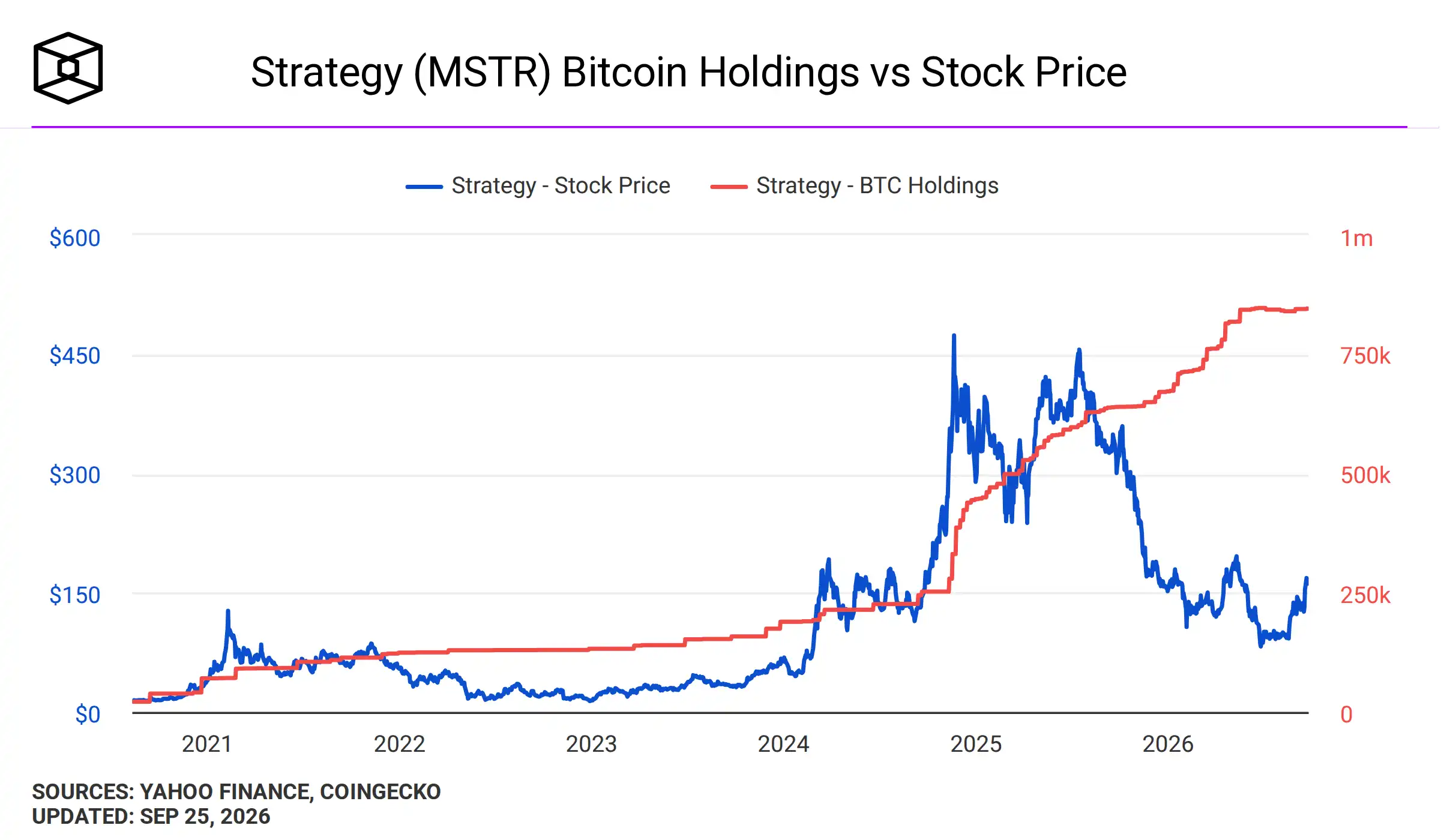
Strategy shareholders previously approved moving STRC from monthly to semi-monthly dividends in June. CEO Phong Le said at the time that paying twice a month was intended to stabilize its price, improve liquidity, and give holders a faster opportunity to reinvest. STRC is a variable-rate perpetual preferred stock designed to trade around a $100 par value. It closed down 0.6% at $98.31 on Thursday, per TradingView, having previously plunged below $75 in June.

Following that drop, Strategy introduced a $1 billion repurchase program for its preferred stock, initially prioritizing STRC. It then doubled the authorization to $2 billion earlier this month.

The four securities covered by the latest proposal form the core of what Strategy calls its "Digital Credit" platform. The company said more frequent payments could make the preferreds more attractive and support its ability to raise preferred equity capital for its bitcoin BTC+0.76% treasury strategy.

"Strengthening our preferred securities would create a competitive advantage for Strategy and increased demand could drive amplification and bitcoin per share," the firm said in a separate statement.

Strategy has scheduled a virtual special meeting for Oct. 28. Approval requires a majority of the voting power of its outstanding common stock, according to its preliminary proxy statement filing. Holders of STRC, STRD, STRF and STRK do not vote on the proposal. If approved, the amendments would take effect after Strategy files the amended certificates of designation in Delaware.